
US FMC Bonds Knowledge
Manifest Filing Knowledge Company News Industry Updates Bonds FAQ US FMC Bonds Knowledge Insurance Knowledge
-
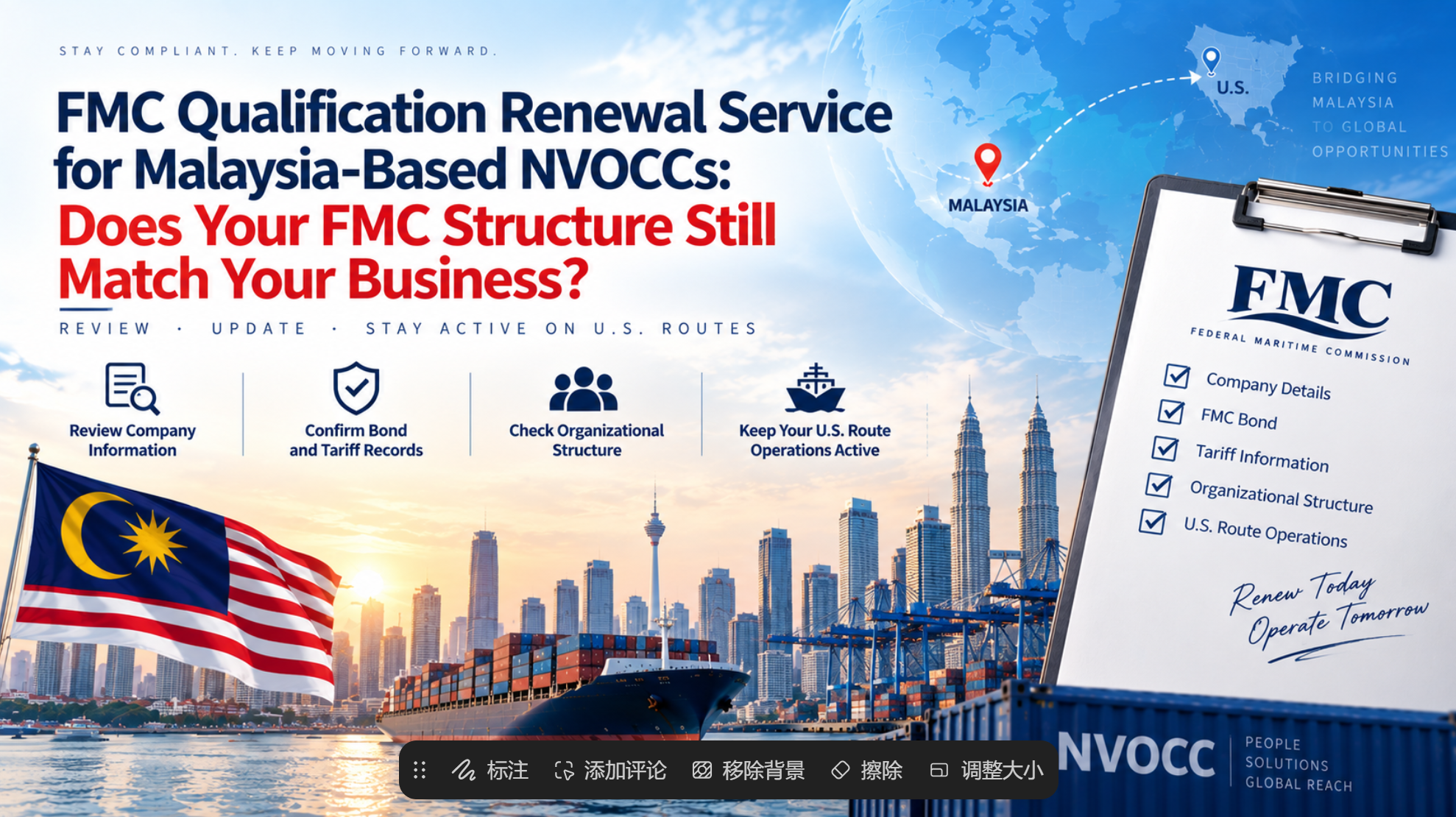 Release time:09.30.2026A Malaysia-based NVOCC may look very different three years after its original FMC filing. U.S.-route volume, trade names, HBLs, carrier relationships and compliance systems may all have changed. Renewal is the right time to verify that the FMC structure still fits the business.
 -
 Release time:09.30.2026Malaysia-based freight forwarders with growing U.S.-bound ocean freight may want to move from relying on another NVOCC toward an independent operating structure. This guide explains how FMC registration, bond, tariff, HBL and related U.S.-route services fit together.
 -
 Release time:09.30.2026For Singapore-based regional logistics groups, FMC renewal is also a chance to verify whether the original applicant entity still matches the company’s current U.S.-route structure.
 -
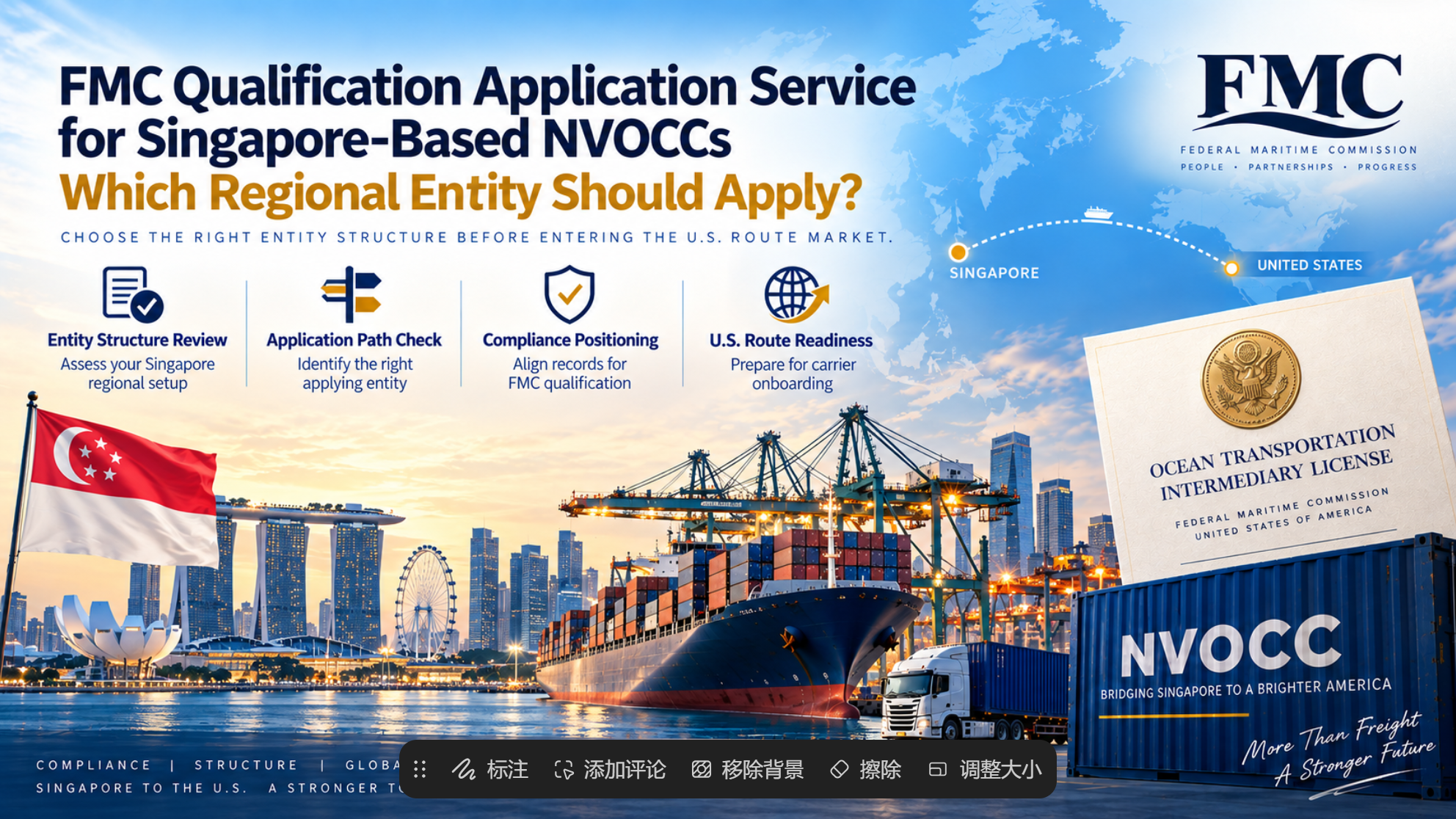 Release time:09.30.2026Singapore logistics groups often operate across several countries. Before a new FMC application, the group should decide whether the Singapore headquarters, a local operating entity or another affiliate will actually provide the U.S.-route NVOCC service.
 -
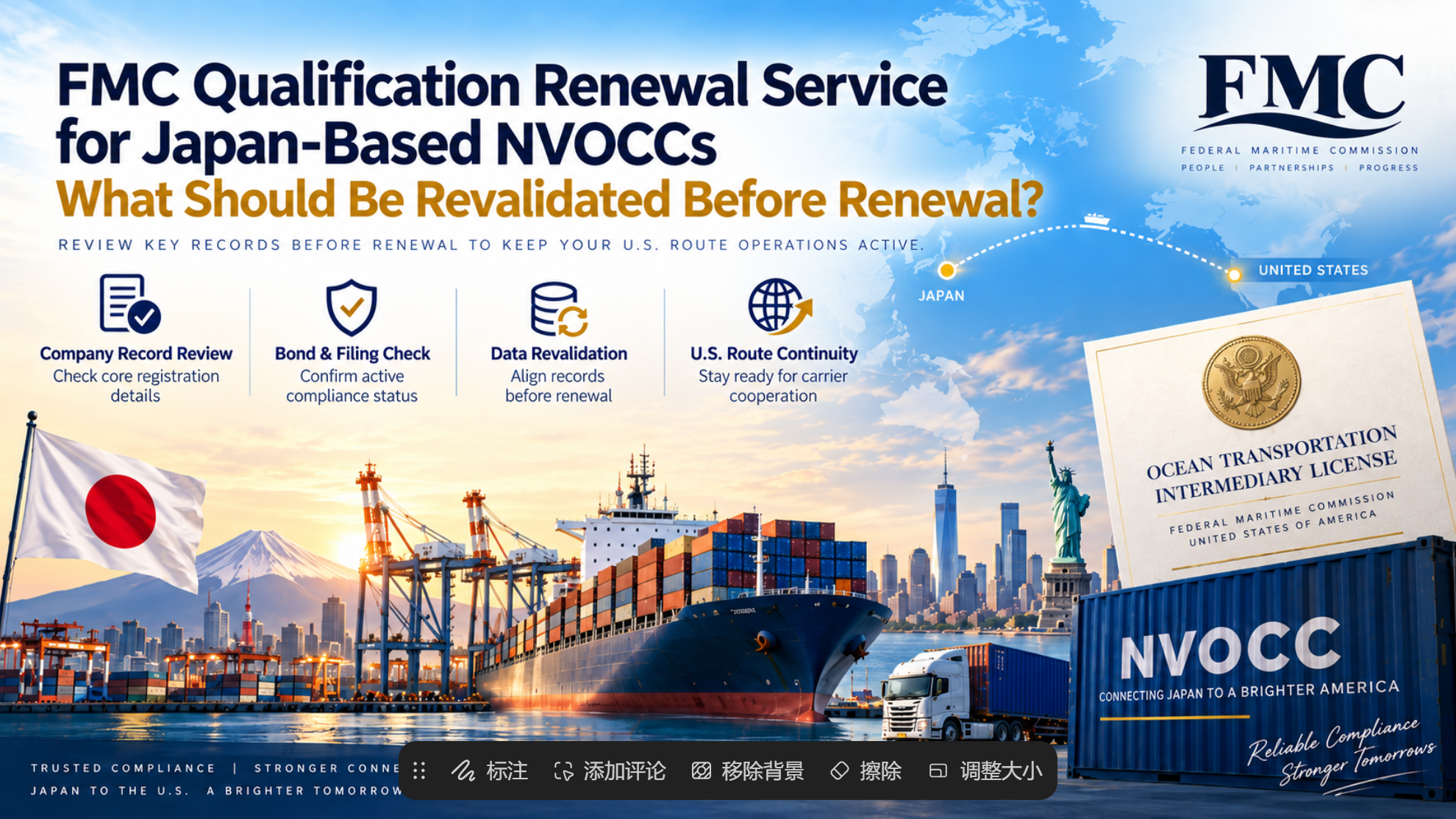 FMC Qualification Renewal Service for Japan-Based NVOCCs: What Should Be Revalidated Before Renewal?Release time:09.30.2026Japan-based NVOCCs should use FMC renewal as a document revalidation checkpoint. Registration or license status, bond, tariff records, HBL, company information and customer-facing documents should still support the same operating identity.
 -
 Release time:09.30.2026Japan-based freight forwarders building independent U.S. ocean trade services should align their legal entity, HBL, FMC registration, NVOCC bond, tariff records and carrier onboarding documents before launch. This guide explains how to build a verifiable FMC/NVOCC identity.
 -
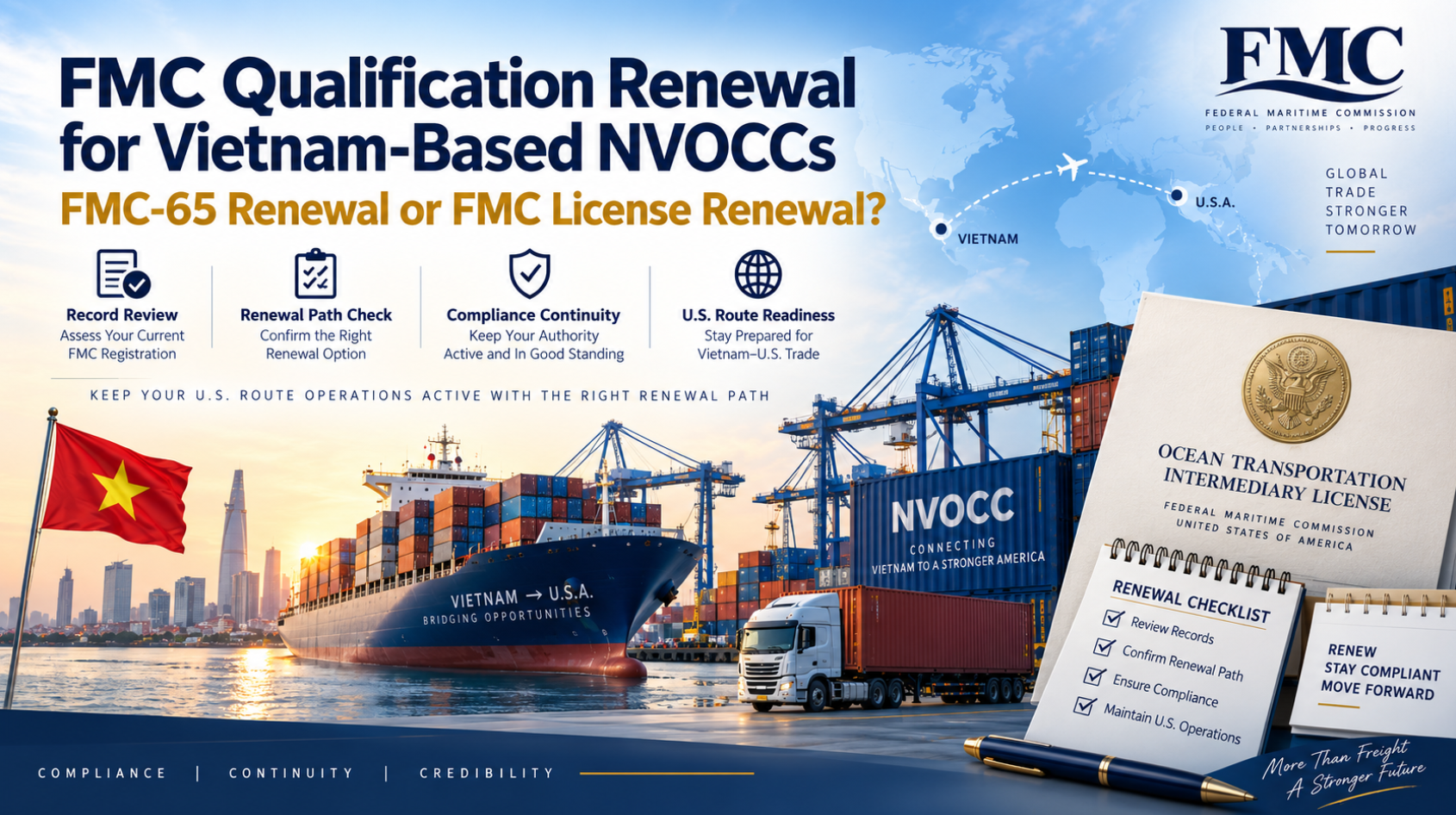 Release time:09.24.2026Vietnam-based NVOCCs do not all use the same FMC renewal process. Foreign registered NVOCCs renew through Form FMC-65, while FMC-licensed NVOCCs follow the OTI license renewal schedule. This guide explains how to identify the correct route and review bond, tariff and company records before renewal.
 -
 Release time:09.24.2026Vietnam-based freight forwarders expanding U.S.-bound ocean freight may eventually need their own NVOCC identity rather than relying entirely on another NVOCC or overseas partner. This guide explains how to prepare the applicant entity, foreign registration or license route, FMC bond, Form FMC-1 tariff, HBL and related U.S.-route setup.
 -
 Release time:09.21.2026India-based NVOCCs do not all follow the same FMC renewal process. Foreign registered NVOCCs renew through Form FMC-65, while FMC-licensed NVOCCs follow the OTI license renewal schedule. This guide explains how Indian NVOCCs can identify the correct renewal path, check the renewal date, review bond and tariff records, and assign renewal support when needed.
 -
 Release time:09.21.2026India-based freight forwarders that want to move from agent-based U.S. ocean freight operations to their own NVOCC identity should review FMC qualification before issuing their own HBL or building independent carrier relationships. This guide explains how Indian freight forwarders can prepare the legal entity, registration route, NVOCC bond, tariff, HBL and related U.S.-route setup.