
US FMC Bonds Knowledge
Manifest Filing Knowledge Company News Industry Updates Bonds FAQ US FMC Bonds Knowledge Insurance Knowledge
-
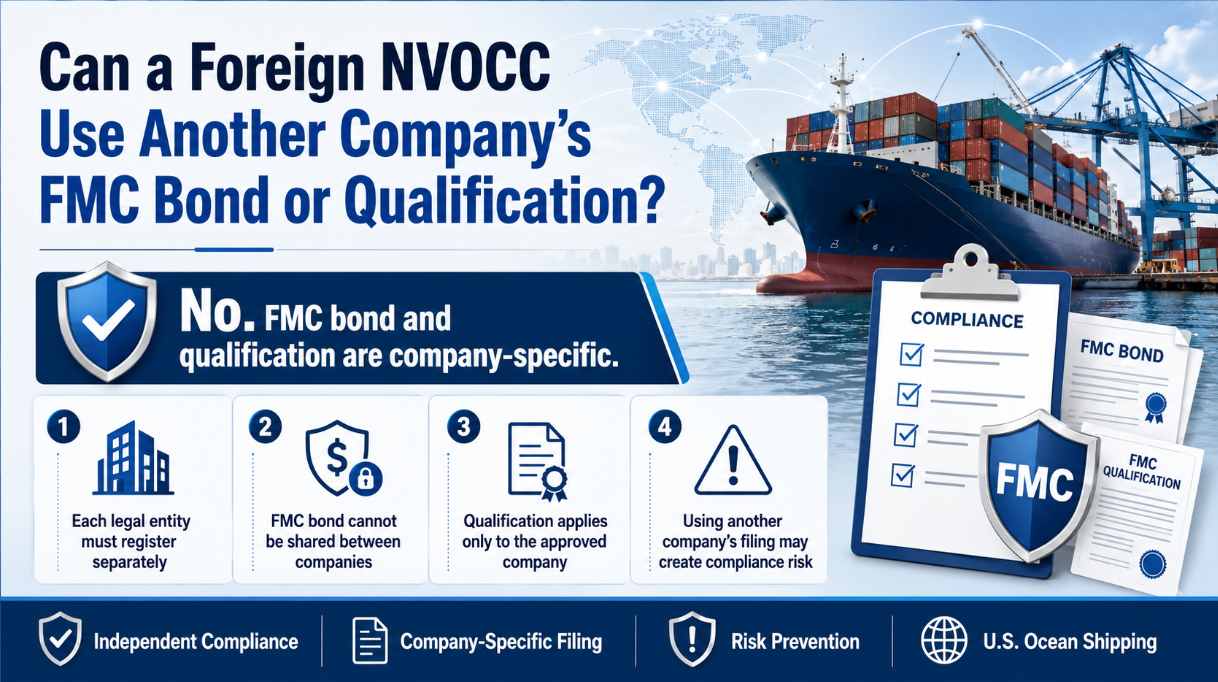 Release time:07.30.2026Foreign NVOCCs sometimes ask whether they can use another company’s FMC qualification, bond, or tariff record to issue house bills of lading for U.S. shipments. This guide explains why the operating company’s legal identity, FMC status, financial responsibility, tariff record, and shipping documents must be reviewed together.
-
 Release time:07.29.2026FMC qualification is an important step for foreign NVOCCs, but it may not complete the full U.S. route operating setup. Companies should also review SCAC, AMS filing, tariff maintenance, bond records, house bill of lading readiness, and partner verification before building U.S. ocean freight business.
-
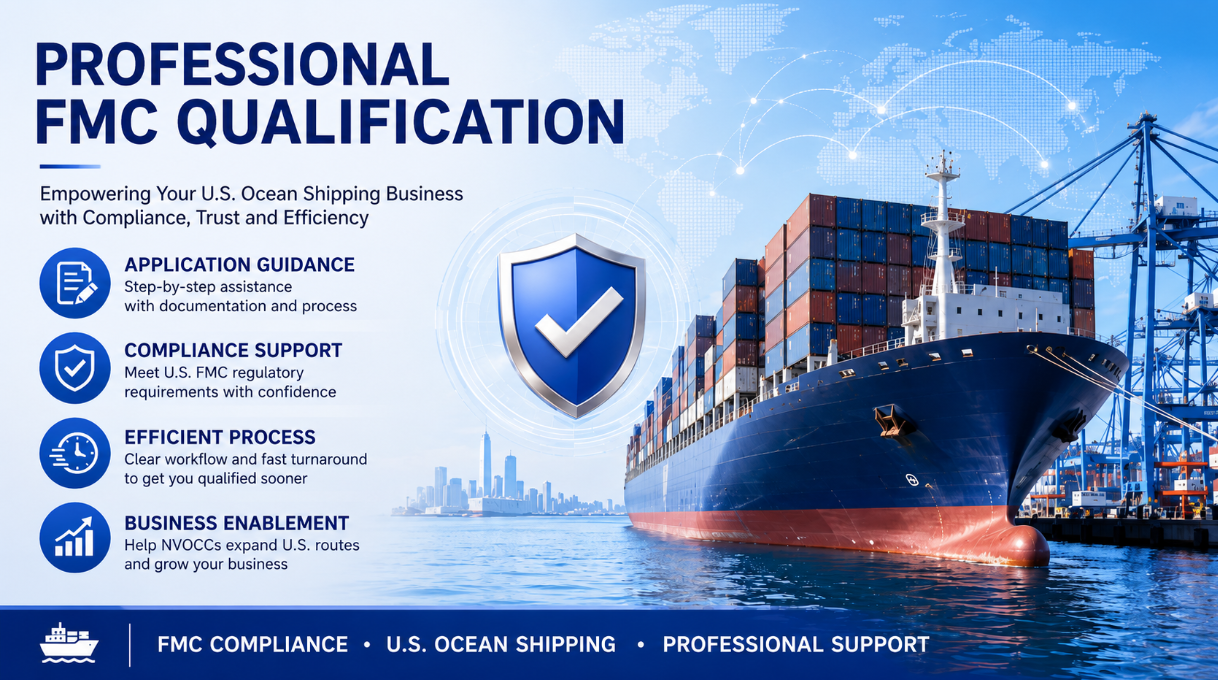 Release time:07.29.2026FMC qualification timing depends on whether a foreign NVOCC chooses registration or licensing, how complete its company information is, whether the bond and tariff filings are ready, and whether supporting records match. This guide explains the main timeline factors and common causes of delay.
-
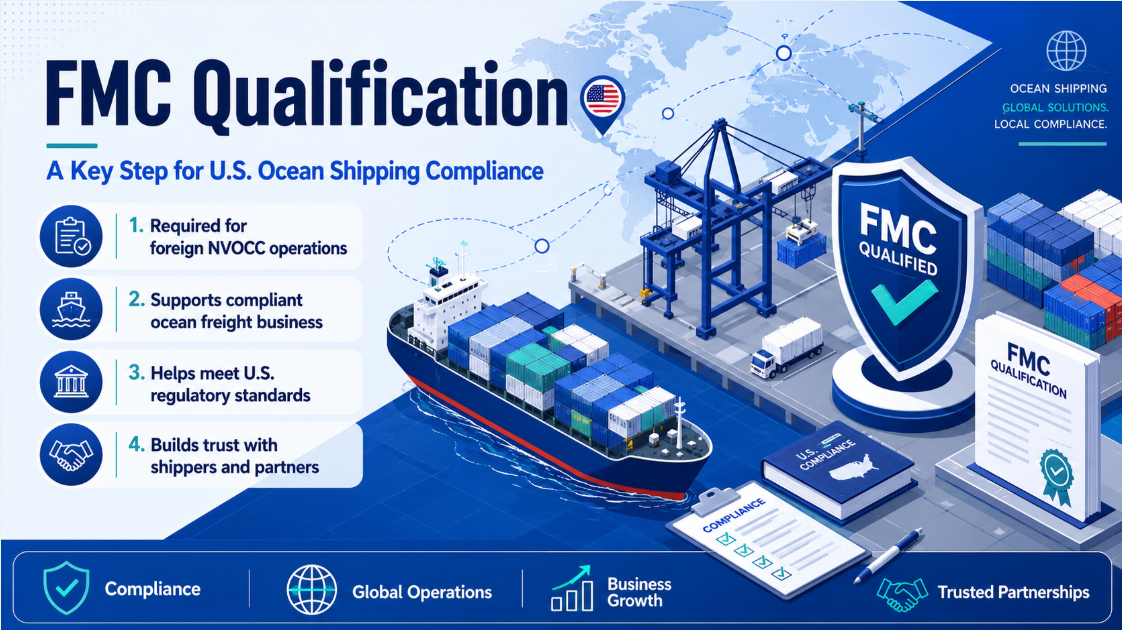 Release time:07.28.2026Foreign NVOCCs entering U.S. ocean trade may choose between FMC registration and FMC licensing. This guide explains the practical differences, including filing forms, bond amounts, U.S. branch requirements, qualifying individual requirements, tariff filing, renewal, and business use cases.
-
 Release time:07.28.2026Foreign NVOCCs entering U.S. ocean trade should confirm their FMC route before issuing house bills of lading or offering NVOCC services. This step-by-step guide explains how to prepare company information, choose between registration and licensing, arrange an FMC bond, complete tariff-related filing, and maintain compliance after approval.
-
 Release time:07.24.2026Operating in U.S. ocean trade without proper FMC qualification can affect carrier onboarding, customer trust, house bill of lading issuance, tariff compliance, bond requirements, and overall business continuity. This guide explains the practical risks for NVOCCs and freight forwarders.
-
 Release time:07.24.2026If a freight forwarder or logistics company wants to operate as an NVOCC in U.S. ocean trade, FMC qualification is not just a “certificate.” It is the regulatory foundation that allows the company to legally hold itself out as an ocean transportation provider, issue its own house bill of lading, maintain required financial responsibility, publish tariff information, and build trust with carriers, overseas agents, and shippers
-
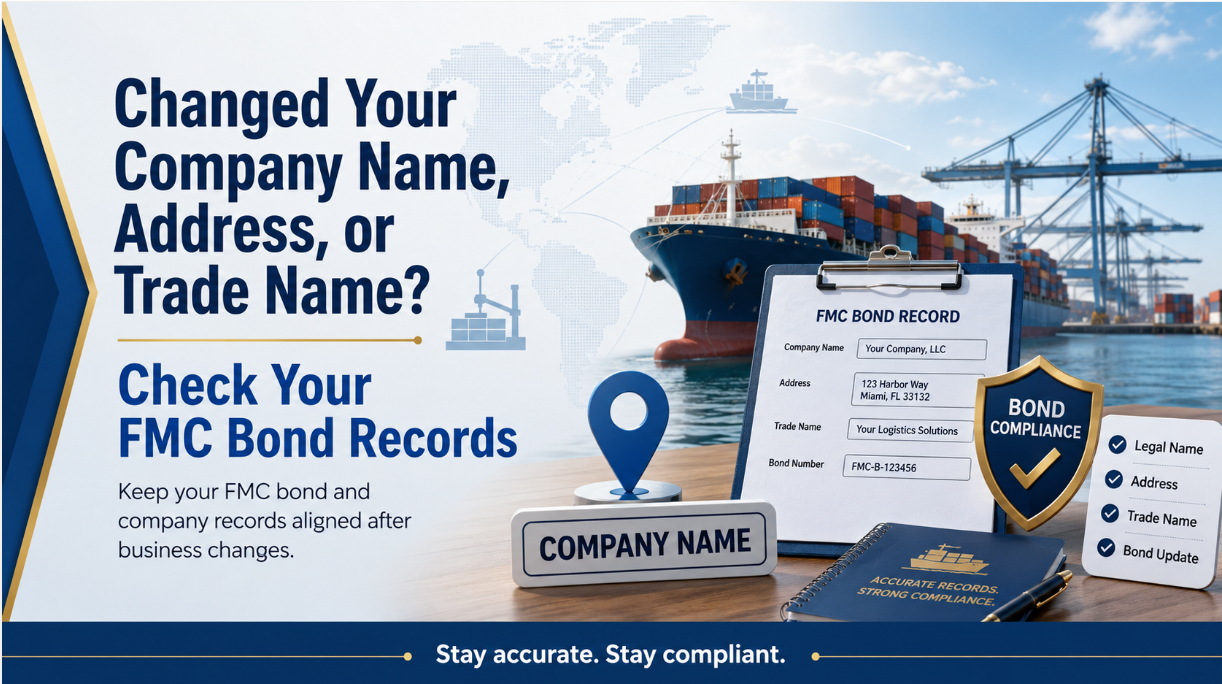 Release time:07.23.2026FMC bond compliance does not end after approval. If an NVOCC or ocean freight forwarder changes its legal name, address, trade name, business structure, or qualifying individual, FMC records and bond information may need to be updated.
-
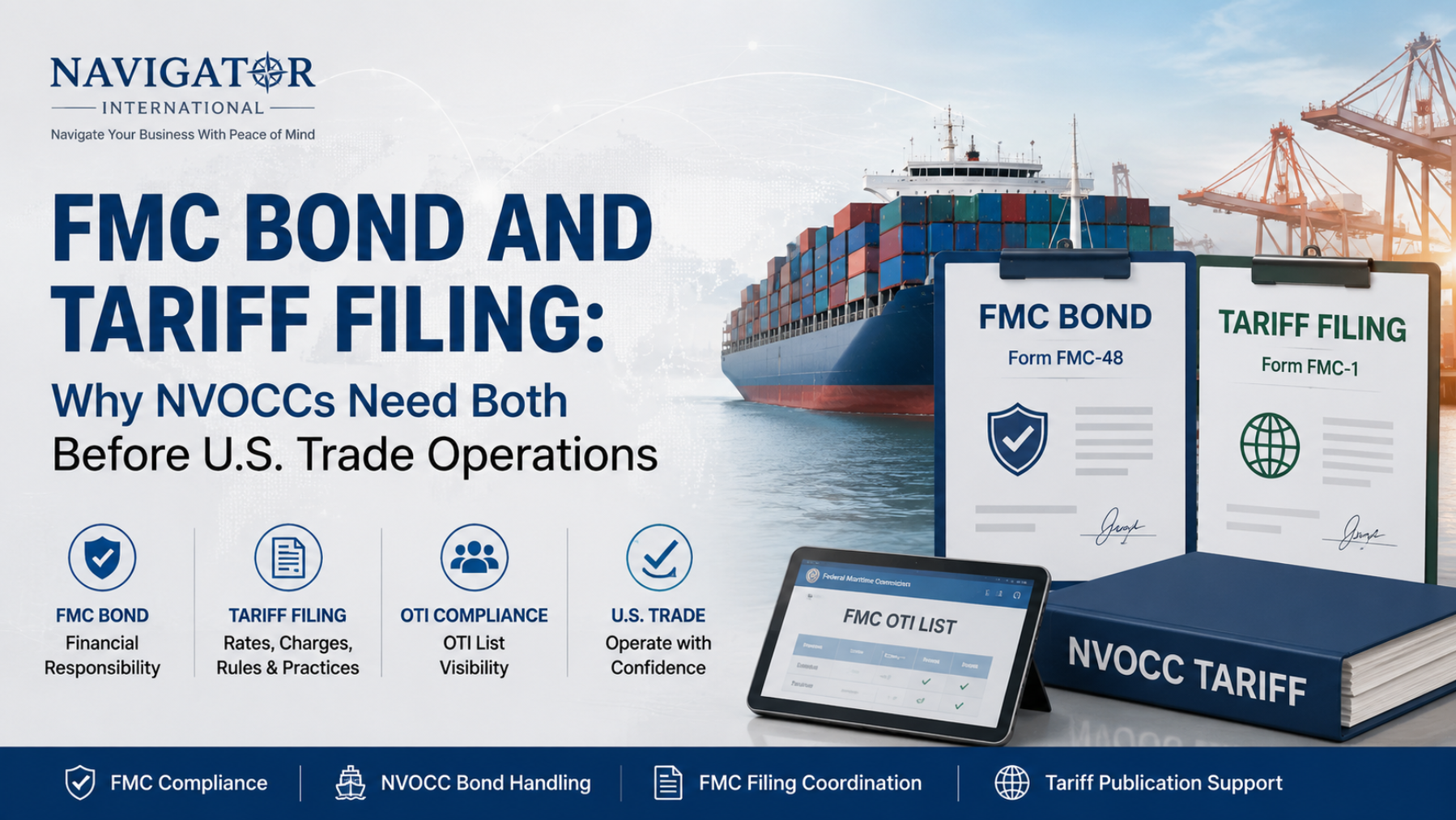 Release time:07.23.2026Can a freight forwarder issue its own house bill of lading before completing FMC qualification? This practical guide explains when NVOCC activity begins, why the FMC bond matters, and what companies should check before serving U.S. routes.
-
 Release time:07.22.2026An FMC bond supports the company’s financial responsibility requirement. A tariff filing identifies where the NVOCC’s tariff is published and helps show that required rates, charges, rules, and practices are available for public inspection. The FMC states that all NVOCCs operating in U.S. trades are required to publish a tariff, and tariffs must show rates, charges, classifications, rules, and practices between service points or ports. In practical terms, an NVOCC should not treat the bond and tariff as separate unrelated tasks.


