
US FMC Bonds Knowledge
Manifest Filing Knowledge Company News Industry Updates Bonds FAQ US FMC Bonds Knowledge Insurance Knowledge
-
 Release time:09.20.2026For Taiwan-based NVOCCs, FMC renewal is an important opportunity to identify company and operational changes that occurred since the last filing. This guide explains how changes to legal name, trade names, address, bond, tariff, HBL and U.S.-route records should be reviewed before or during renewal.
 -
 Release time:09.20.2026Taiwan-based freight forwarders that want to establish their own NVOCC identity for U.S. ocean trade should prepare more than an FMC application. Before carrier onboarding or issuing their own HBL, companies should align the applicant legal entity, FMC registration route, NVOCC bond, Form FMC-1 tariff, trade names and related U.S.-route records.
 -
 Release time:09.18.2026For South Korea-based NVOCCs already serving U.S. ocean trade, FMC renewal is about protecting business continuity as well as maintaining regulatory records. This guide explains how Korean NVOCCs should review their renewal date, FMC bond, Form FMC-1 tariff information, public status, HBL identity and carrier documents before a renewal issue affects U.S.-route business.
 -
 Release time:09.18.2026South Korea-based freight forwarders that want to issue their own HBL, develop independent U.S. ocean trade services, or build a stronger NVOCC operating structure should review FMC qualification before expanding U.S. routes. This guide explains how Korean freight forwarders can prepare a new FMC qualification application.
 -
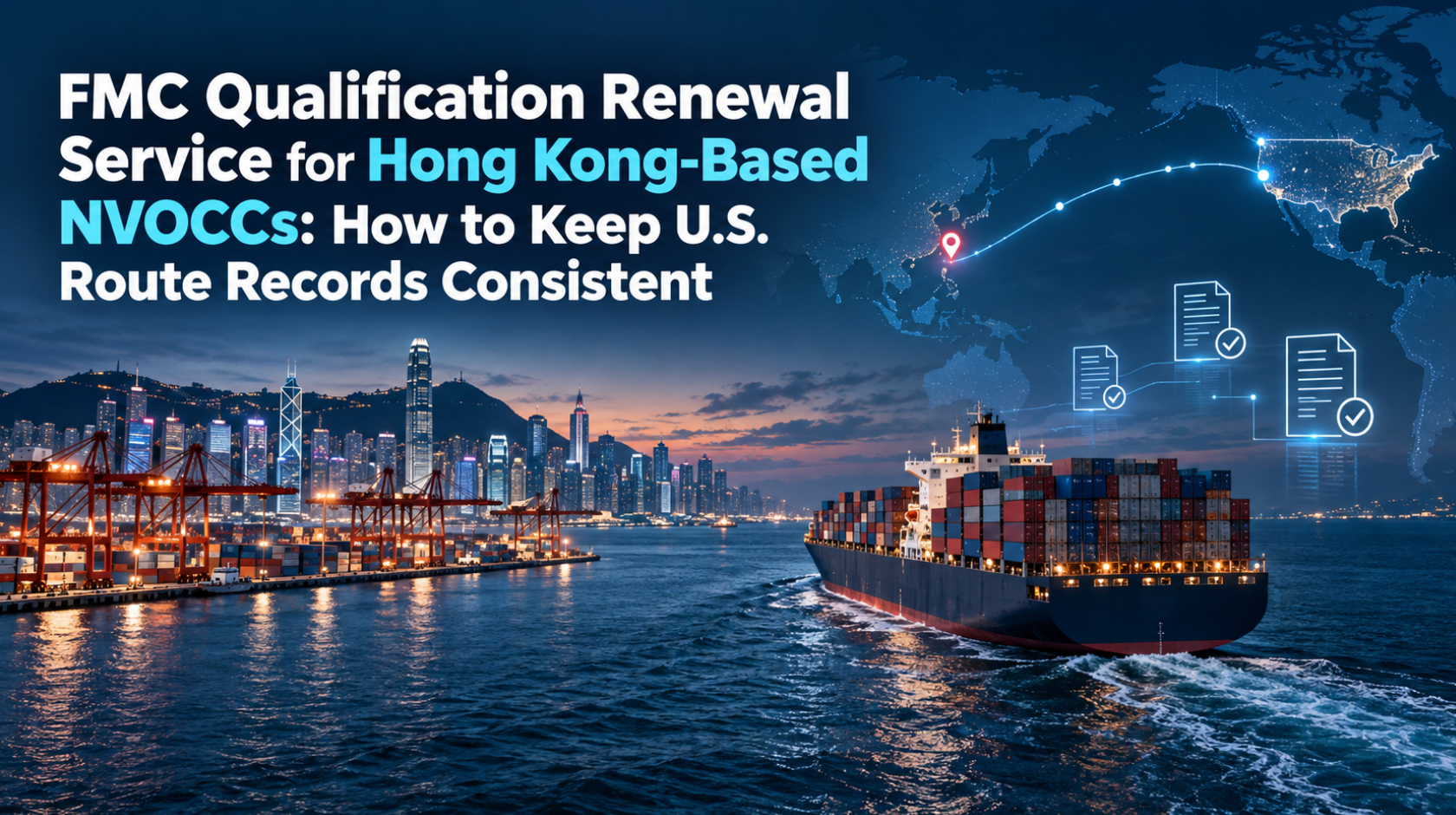 Release time:09.17.2026Hong Kong-based NVOCCs and freight forwarders serving U.S. ocean trade should review FMC renewal before the deadline affects public verification, bond continuity, tariff records, carrier onboarding, HBL use, SCAC, AMS, or customer trust. This guide explains how Navigator International can support FMC renewal for Hong Kong-based logistics companies.
 -
 Release time:09.17.2026Hong Kong-based freight forwarders and NVOCCs that want to enter U.S. ocean trade, issue their own House Bill of Lading, or build direct carrier cooperation should review FMC qualification before launching U.S. route services. This guide explains what Hong Kong companies should prepare for new FMC qualification application support.
 -
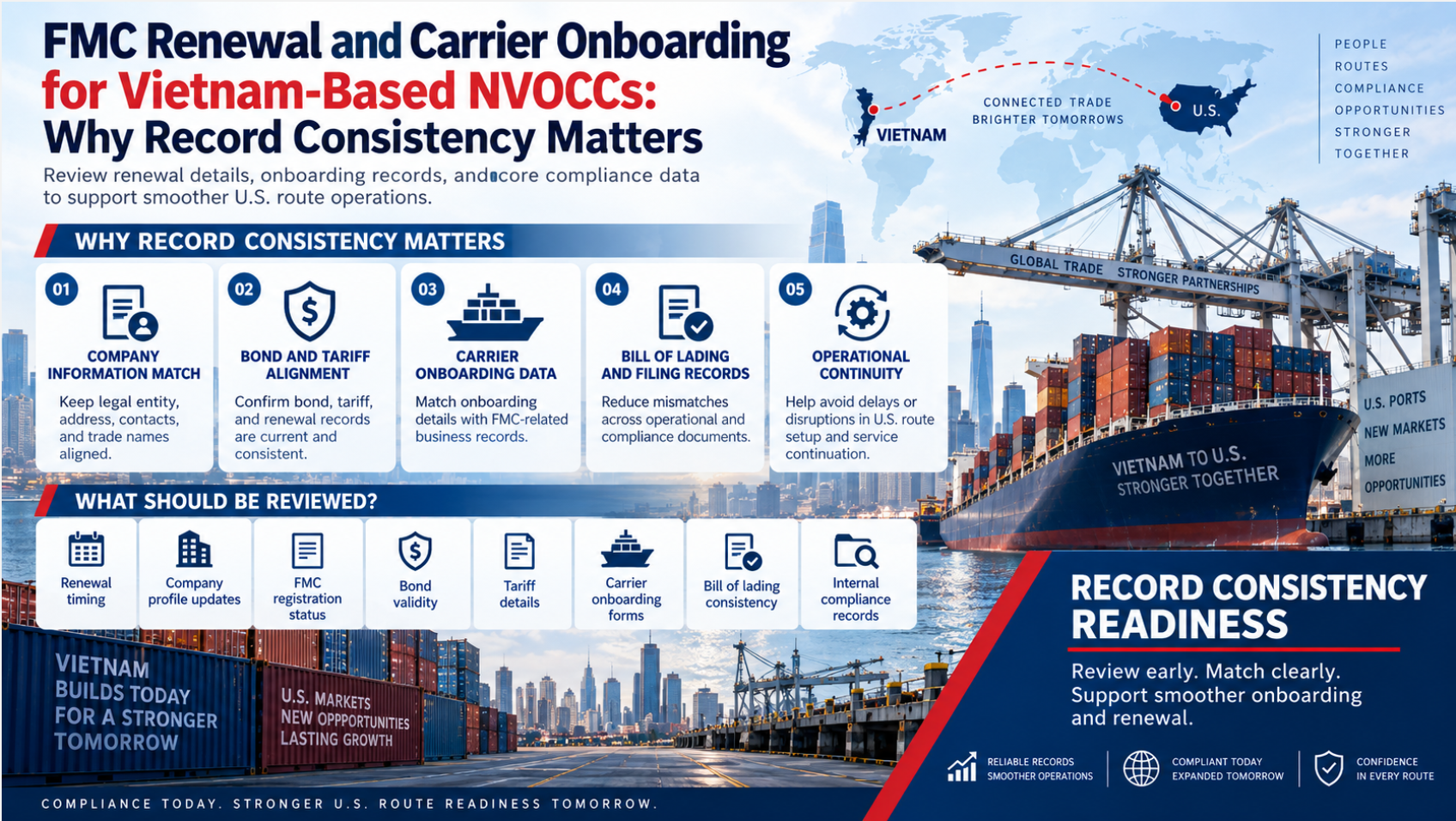 Release time:09.15.2026For Vietnam-based NVOCCs, FMC renewal is closely connected with carrier onboarding, customer verification, HBL use, NVOCC bond continuity, tariff records, SCAC, AMS, and U.S. route service credibility. This guide explains why renewal should be coordinated with the documents and systems used in daily U.S. ocean trade operations.
 -
 Release time:09.15.2026Vietnam-based freight forwarders and NVOCCs serving U.S. ocean trade should review FMC qualification renewal before the renewal deadline affects bond records, tariff information, HBL identity, carrier onboarding, AMS setup, or public FMC verification. This guide explains what Vietnam-based NVOCCs should check before renewal and how Navigator International can support the renewal process.
 -
 Release time:09.14.2026For India-based NVOCCs serving U.S. ocean trade, FMC renewal is not only a compliance deadline. It may affect carrier onboarding, customer verification, HBL use, tariff records, bond continuity, SCAC, AMS, and long-term U.S. route operations. This guide explains how to keep FMC-related records active and consistent before renewal risk interrupts business.
 -
 Release time:09.14.2026India-based freight forwarders and NVOCCs serving U.S. ocean trade should not treat FMC qualification renewal as a simple reminder. Before renewal, companies should review whether their registration or license status, FMC bond, Form FMC-1 tariff information, legal name, trade names, HBL identity, and U.S. route service model are still accurate.