
US FMC Bonds Knowledge
Manifest Filing Knowledge Company News Industry Updates Bonds FAQ US FMC Bonds Knowledge Insurance Knowledge
-
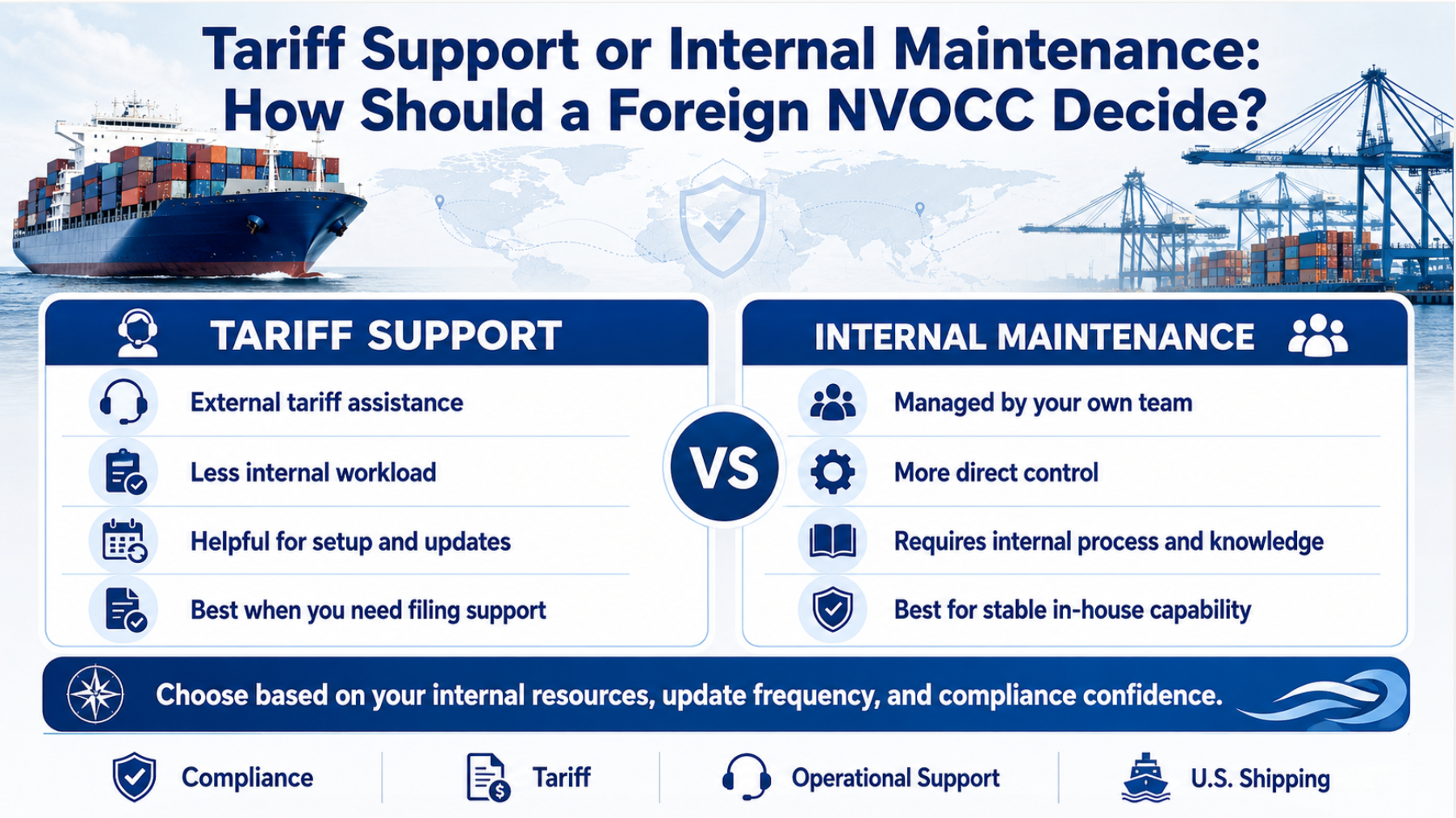 Release time:08.18.2026Tariff setup is not only an initial filing step. Foreign NVOCCs should decide whether to manage tariff records internally or use ongoing tariff support based on route complexity, rate changes, trade names, internal staff, and U.S. route growth plans.
 -
 Release time:08.18.2026Foreign NVOCCs often focus on FMC filing, bond handling, and tariff setup, but the house bill of lading may become the document that customers and carriers review most closely. This service decision guide helps companies decide whether HBL template review should be included before U.S. route operations begin.
 -
 Release time:08.17.2026NVOCCs serving U.S.-China trade may hear about an optional rider for additional NVOCC financial responsibility. This service decision guide explains when the rider may be relevant, when it may not be needed, and what companies should confirm before adding it to an FMC bond.
 -
 Release time:08.17.2026Most NVOCCs use an individual FMC bond, but some logistics groups may consider a group OTI bond structure. This guide helps companies compare Form FMC-48 and Form FMC-69 based on legal entity structure, operating responsibility, bond control, future updates, and public verification.
 -
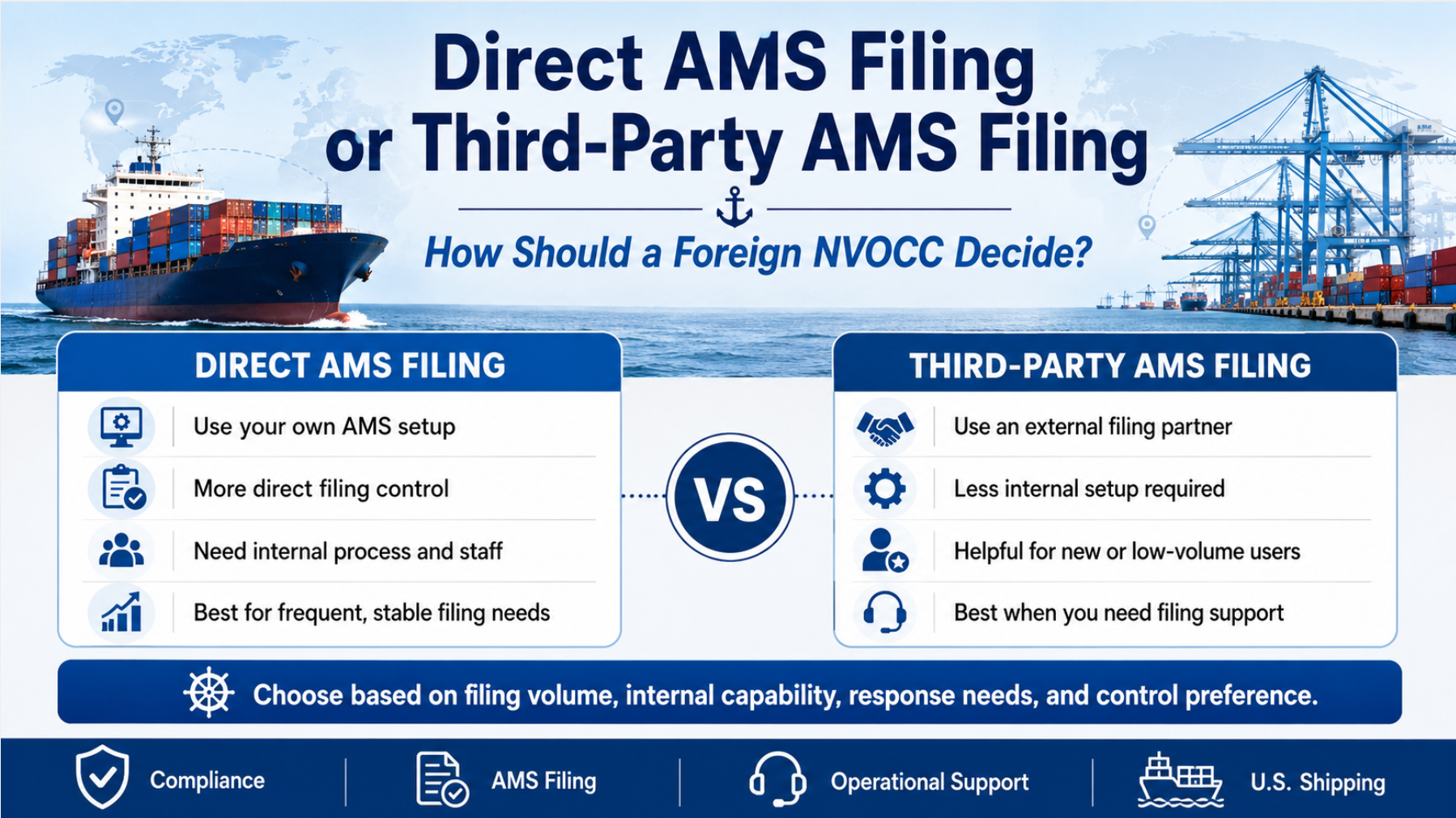 Release time:08.14.2026After reviewing FMC qualification, many foreign NVOCCs must decide whether to build direct AMS filing capability or continue using third-party AMS filing. This guide explains the service decision based on shipment volume, data control, filing responsibility, SCAC, CBP setup, and U.S. route strategy.
 -
 Release time:08.14.2026FMC qualification does not end after the initial filing. Foreign NVOCCs should decide whether one-time filing is enough or whether ongoing compliance support is needed for bond monitoring, tariff maintenance, record updates, company changes, and U.S. route operations.
 -
 Release time:08.13.2026A foreign NVOCC may consider the FMC license route because the financial responsibility amount is generally lower than the foreign registration route. But the license route requires a qualifying U.S. branch and qualifying individual. This guide helps foreign NVOCCs decide whether building a U.S. branch is worth the additional structure.
 -
 Release time:08.13.2026A foreign NVOCC should not start FMC filing before confirming its operating role, legal entity, HBL strategy, FMC route, bond amount, tariff requirements, and U.S. route setup needs. This pre-assessment guide helps companies decide what type of FMC support is suitable before documents are prepared.
 -
 Release time:08.12.2026For group companies and freight forwarders with multiple affiliates, choosing the wrong legal entity for FMC qualification can create problems across bond filing, tariff setup, HBL issuance, carrier onboarding, and public verification. This guide helps foreign NVOCCs decide whether the parent company, subsidiary, operating company, or U.S. branch should be used for FMC-related filing.
 -
 Release time:08.12.2026Foreign NVOCCs often use legal names, English names, brand names, and trade names across different markets. Before FMC filing, companies should decide which names should appear in FMC records, bond documents, tariff records, HBL templates, and carrier onboarding materials. This guide helps companies choose a clean naming structure before application.